
Loria Harris
For Her Majesty’s Historical Records
OMEN: One day the world became a mollusk, a clamping shell hinging on horizon, the sky bludgeoning the heads of men, women, and children as the dirt below pushed them straight up into it. At night, stars dripped like slime from the clammy ceiling of dark; buildings, as if led by intuition, shrunk in height to accommodate, and even the tallest of people walked slumped and hunched. Across the world, news stations reported predictions about the coming unhinging as did the local headlines. Mary, pregnant with baby, the father of whom was uncertain—not that she had many partners but that she didn’t remember having one at all at the time of conception—stroked her belly and picked out cribs with collapsible legs, just in case.

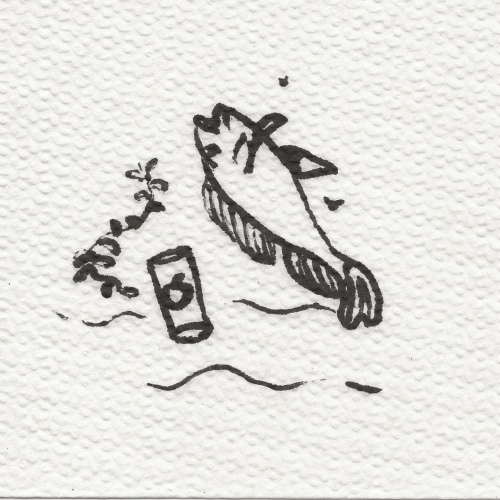
ABUNDANCE: Fifty years ago, apple juice flowed through the Singhy River, the one that runs alongside the brick stores of Old Town. My mom tells me that; does yours tell you? The kind of apple juice that’s urine yellow and does not have no-added-sugar or one-hundred-percent-juice on its label. Fish flopped out of the river, flat dead and sticky, all along the cobblestone road. Cars squashed them into a pulpy syrup that stank up the town and killed the tourism for the whole summer, even with the annual watermelon and snickerdoodle festivals in May and August, respectively. How did our parents survive growing up like that?
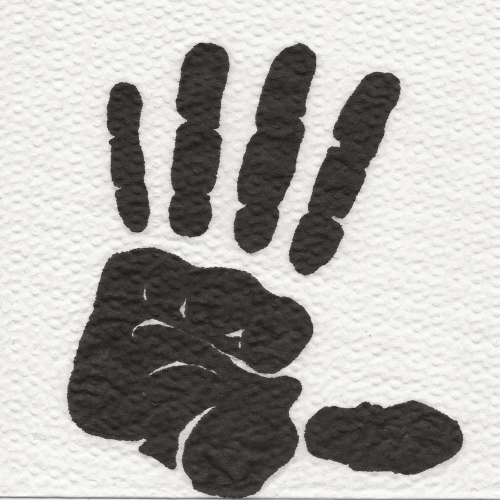
PRESERVATION: No one gives presents anymore. Not since the Awakening of 2062. A present could transform into a curse unannounced, and even the President of the United States was afflicted accidentally. His wife, God rest her soul, gave him a commemorative pin—an American flag with multi-colored stars: red stars to represent the African heritage in our nation, yellow to represent Hispanic populations, orange for Indian and Asian cultures. The patchwork of our tapestry in a beautiful star-studded kaleidoscope of tribute. But when he wore it, his hands bled a deep sapphire blood, and the handprints in midnight tones still remain on the White House walls, in memory of the tragedy that eventually overtook his entire body. Children gave valentines to other children at school, only for a red heart sucker to permanently affix itself to a young tongue, the kid slobbering in pink, cherry-flavored droplets for the rest of her life. Families began the new tradition of hugging beside the Christmas tree—fingers interlaced, every member who could come at once squeezing into one another on the count of three, a special long pushing of loose skin and squish to make sure there was something to anticipate. Grandparents, parents, children, aunts, and uncles seated together around an oak table, all partaking of flaky biscuits and greasy bacon, each taken without passing to anyone else.
TURNING POINT: At first, the sun rose as it usually does. That morning the sky bled lilac purples and crimson pinks until the glowing orb reached a quarter of the way up the expanse. The vibrant striations cleared, and the sun stopped its upward move. Instead of raising its chin in a nod to come back down on the other side of the dome, it swayed to the side in a half headshake of “no.” And it continued inching sideways in that same direction, slowly. Weather reporters materialized on one street corner in every town, pointing out the trajectory as if there were a green screen behind them. “We can confirm, the sun has moved twenty degrees west since reaching its highest point at 7:02 a.m. today. Experts predict this movement will continue throughout the day, with no consensus on whether it will set tonight.” Lilly and Jack were engaged and planning to be married the following day. “If it doesn’t set, will there be a tomorrow? What about our wedding day?” She steamed her dress, an ivory patchwork of lace. “Our clocks still work,” her mother assured her. “We’ll go by them.” And that’s what the world did, for fifty years, as the sun rounded the globe endlessly in the wrong direction. The western hemisphere lived in eternal morning, while the eastern lived in varying degrees of twilight and dark. The northern long-eared bat population grew nearly extinct, but then the sun’s path resumed. Historians called it the Period of the Clock, because much more relied then on those ticking hands than ever before or after.

CURATOR’S NOTE
These are the snippets I have put together so far, the sense my team and I have made from our study of the journals found in the nuclear fall-out shelters in East Village, Relwick. The make-shift notebooks we discovered contain more drawings than words. Attached are reproductions of actual symbology found in these documents, preserved on archival paper. All text has been extrapolated from fragments, and the authors’ original intentions formulated through inference. My interpretation and documentation are ongoing. Expect more updates next month.

Loria Harris is an MFA in Writing student at Lindenwood University. Her fiction and poetry have been published in Reverie Literary Magazine, Winged Penny Review, JAKE, and others. She reads poetry for Iron Horse Literary Review, and she is a recipient of the Alyson Dickerman Poetry Prize and the Jim Haba Poetry Award. Loria shares work on Instagram under the handle @looksbooksandloria and on Bluesky under @loriaharris.bsky.social.
A Song for Loria
 Club Plum